

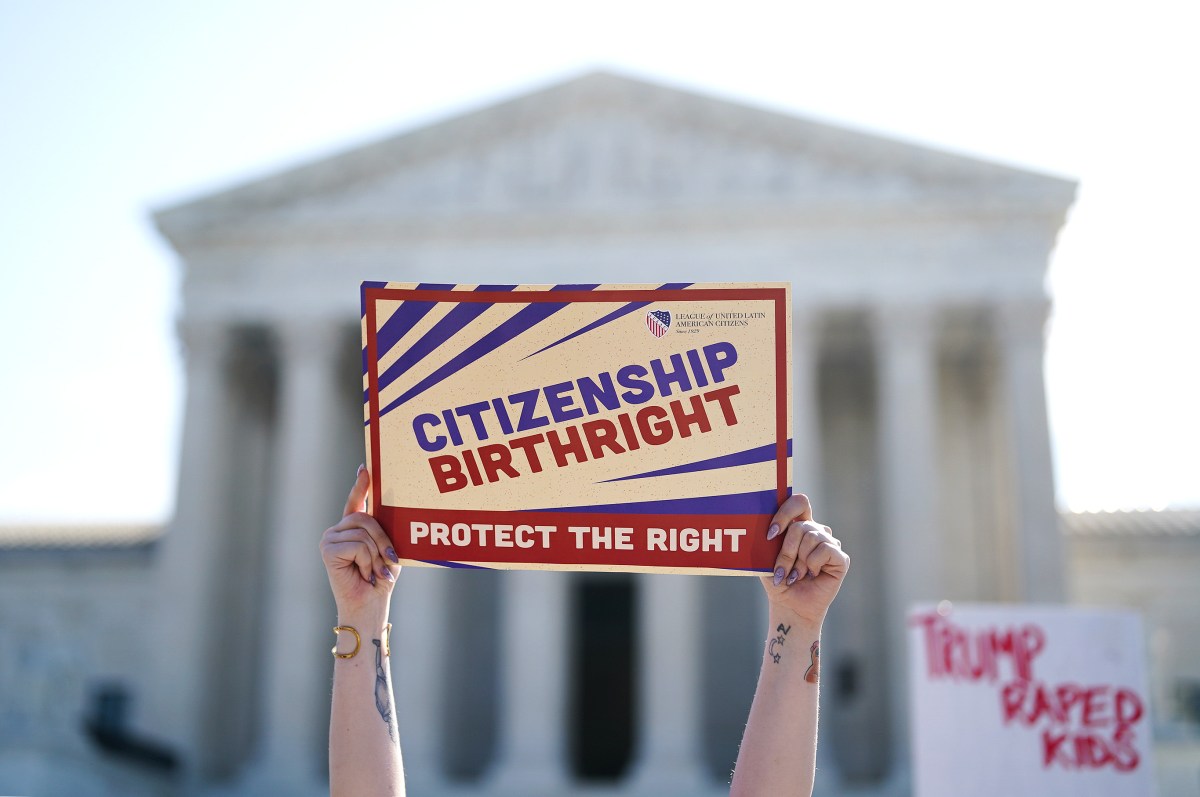
The End Birthright Citizenship for Territories Act, introduced by Representative Morgan Griffith, a Virginia Republican, would amend federal laws that grant U.S. citizenship at birth to people born in Puerto Rico, Guam, the U.S. Virgin Islands and the Northern Mariana Islands. The legislation would limit those provisions to people born before January 1, 2027, effectively ending automatic citizenship for future births unless at least one parent is a U.S. citizen or lawful permanent resident.
Birthright citizenship is the legal principle that grants U.S. citizenship to most people born on American soil, regardless of their parents’ immigration status. The administration has sought to restrict the long-standing interpretation of birthright citizenship, but those efforts stalled on June 30, when the Supreme Court struck down President Donald Trump’s executive order.
The case that prompted the ruling, Trump v. Barbara, had addressed whether children born in the United States to parents who are unlawfully or temporarily present are entitled to citizenship at birth under the Fourteenth Amendment’s Citizenship Clause. The court held that such children are “subject to the jurisdiction” of the United States. The new proposal is part of the Trump administration’s push to reduce immigration levels and tighten restrictions on who can qualify for U.S. citizenship.
So, what, Puerto Rico and the US Virgin Islands are no longer subject to the laws of the United States? So, there is no federal court in Puerto Rico exercising jurisdiction over the territory? What about the US Virgin Islands?
Does that mean they don’t have to pay taxes to the fascist regime?
Birthright citizenship is by no means the standard. It’s not rare, but most of the world does not use it. Most of them are in the Americas, but that whole thing gets complicated.
Most countries grant citizenship to the children of their citizens. IOW, the child inherits citizenship from its parents. If nothing else, the mother is going to be known by nature of the birth, and the child would have at least her citizenship.
(Exceptions exist, but they exist for Jus Soli as well)
This is true. I was thinking of some worst-case scenarios as to implementation where they decide that those people who gave birth to those children weren’t really American or whatnot. I would not put it past the administration to deny applications for any and every reason they think they can get away with.