

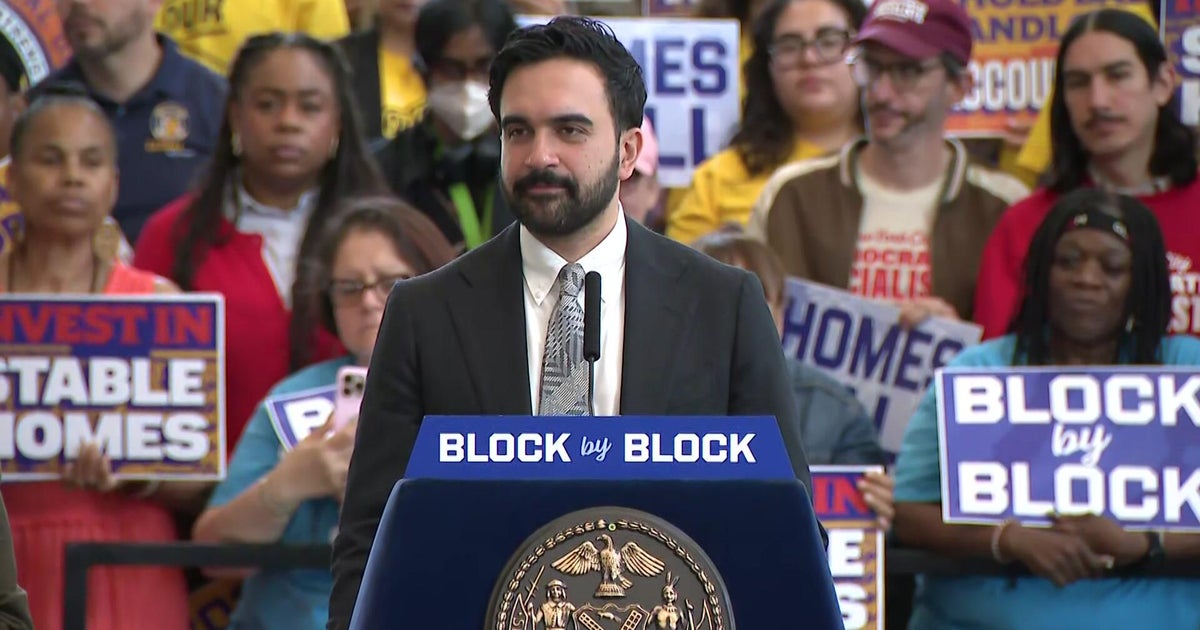
New York City Mayor Zohran Mamdani announced a new “block by block” initiative to tackle the city’s affordable housing crisis Tuesday morning.
The plan focuses on 400,000 affordable housing units, enhancing tenant protections and investing in public housing. Some 200,000 of those units will be new, rent-stabilized homes built over the next decade, as well as preserving and stabilizing an additional 200,000 homes.
Nobody would build anything if the first X number of units had to be affordable, unless I’m misunderstanding you. The city needs 200k units of affordable, and so until that need is met, any new unit is affordable? Development would be stifled entirely. And I hate it, as someone who likes affordable housing, but it’s a give and take, and nobody is going to spend money on a project that they can’t make money. Mandatory set-asides on projects over X number of units is the only feasible compromise.
Affordability is a function of an economic environment, which makes it an intrinsically imaginary problem.
All governments have a unique ability, through policy, to require the provision of a base load of subsistence resources before extraction is tolerated, not doing so is literally a choice.
Tolerating the concept of affordable housing creates an unnecessary, and debasing, stratification.
To rephrase my original assertion, the first 100% of primary residence demand should just be understood to be housing. Secondary, short stay, premium, and other use cases should only be tolerated in the stock beyond that initial 100%.
I appreciate what you’re saying, but I don’t understand how it’s feasible. You have people with second homes in beach communities, and so they shouldn’t have those, those second homes should be primary residences. But those communities, now, are not situated to support people in those as primary residence, not at 100%. I’m talking schools, police, fire, utilities, the whole nine. All of those things take into account basically nonuse during a certain time. And that’s excluding the fact that if these were occupied full time, people wouldn’t be able to get to work every day, it would be chaos. And yes, there are solutions, but feasibility is key, and I just don’t see it being feasible.
I like what Mamdani is doing. If you’re essentially wasting space, having essentially uninhabited apartments in a city that needs affordable places to live, he’s taxing the shit out of them (I’m simplifying). And so ideally this creates some pool of funds to be used toward affordable housing, but at the end of the day I still think the best thing to do is mandate set-asides for affordable, 20% of the units on any project. An alternative is obviously that the government builds housing, but the benefit of private development is that now those affordable units are also tied to market rate units, and so the developer has an interest in maintaining all the units. With a 100% government funded affordable housing project, it just leaves the door open for cuts that turns it from an opportunity into a slum.
I don’t disagree with you, I just don’t know that it’s realistic. But I do think its philosophically where the discussion needs to begin, and then we need to account for pesky reality.