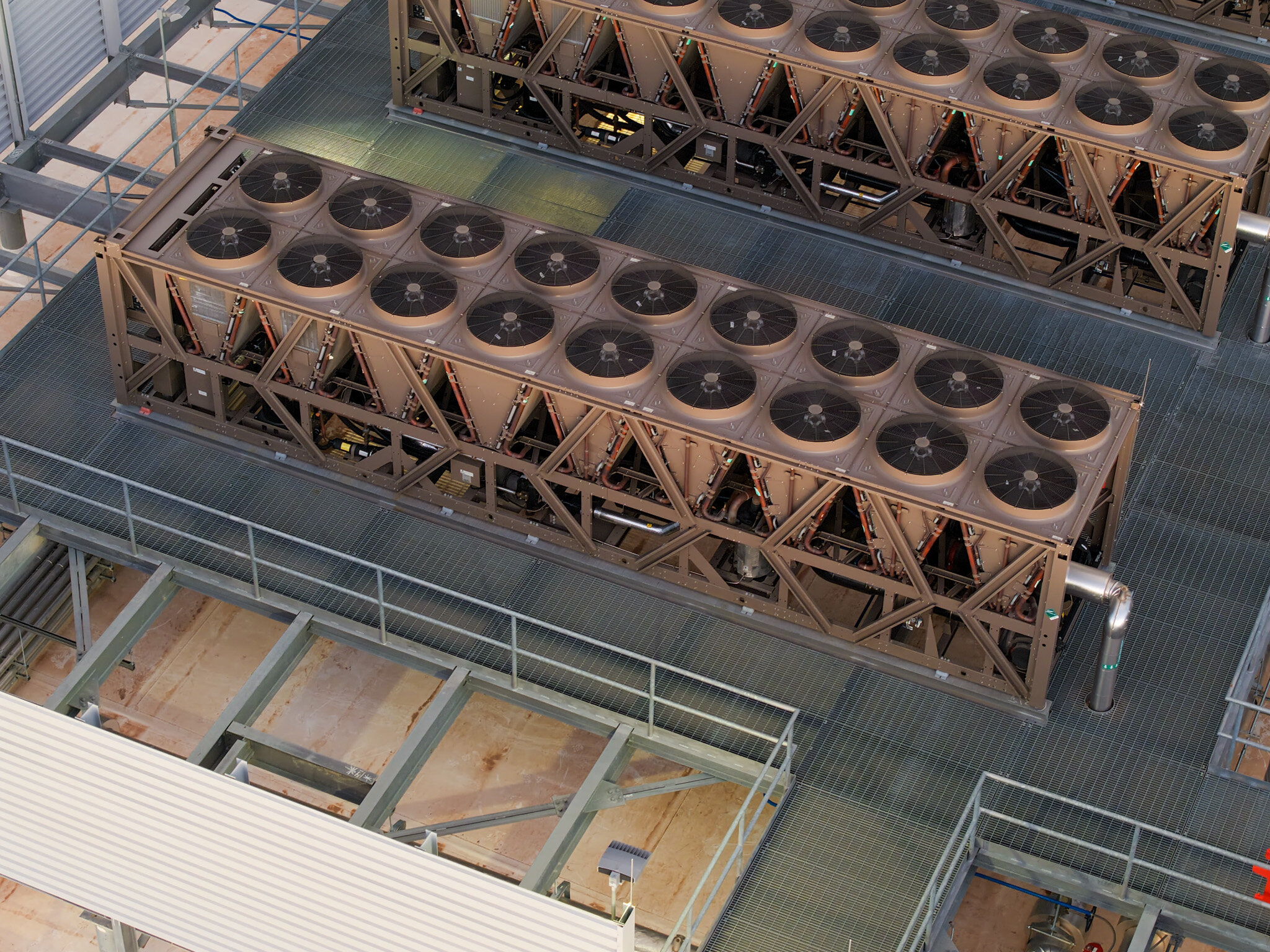
Waste heat from data centers can boost air temperatures in downwind neighborhoods by as much as 4 degrees Fahrenheit, researchers at Arizona State University report in a new study conducted in the Phoenix metro area, the hottest in the U.S.
Yeah, this is fundamental; if you use a thousand joules of energy to do work (of any kind) you will ultimately end up producing a thousand joules of waste heat. The only choice one has in the matter is where that heat goes.
This is a major reason why I get annoyed at the people pooh-poohing space-based data centers. It literally puts the waste heat outside the environment. It should be everything that data center opponents say they want.
The issue with space-based data centres is dissipating that heat, though. The ISS radiators can dissipate less than 100kW and they are the largest in space today, IIRC. Current land-based data centres already generate 100s of MW of heat. US Datacentres alone already consume multiple TWh of electricity/year.
I’m all for space-based data centres. But I don’t believe anyone who says they’re coming soon. One small space data centre would be 10 ISSs—the largest space architecture project to date.
I think what people who are pooh-poohing on space data centres are concerned about isn’t the literal heat issue, but that it serves the same purpose as the “Hyperloop”: not a real practicality, but serves to focus lawmakers attention in a direction that ignores a practical issue (with Hyperloop it was away from California HSR, which now has its own problems, but at least it was feasible)
That article was incorrect, then. There are many satellites already in orbit that have computers in them - basically all of them do, nowadays - and cooling them is a well understood engineering problem.
Which means they’re not as useful, way more expensive, existing ones can’t be serviced or upgraded and they won’t be able to keep up with induced demand. I.e. they’re not practical. Just because something is theoretically doable doesn’t mean it will actually work for what want it to do.
Also cooling chips in space is something we had to solve in order to explore and have satellites whereas the lack of AI data centers in an invented problem. There’s no actual need or demand for them.
Also there’s not enough money (actually money, not imaginary money that our financialized economy makes) to pay for it even it where practical to do. They’re not even able to afford the normal ones lol. Orbit based data centers ain’t happening.
Space-based data centers are wildly impractical to bordering on not physically possible. The largest feature on the ISS, which you can resolve from earth with a pair of binoculars, is the radiators, and it generates 70 kW. Large data centers use >100MW of electricity. You’d be looking at large fractions of a square mile of just radiators.
The radiator panels on the ISS are 2,500 square meters in area. The radiator panels are 645 square meters.
Most of the proposals for space-based data centers have ended up focusing on plans to place thousands of individual satellites into orbit, not just one big space station with everything packed inside it. Scott Manley recently did an analysis of the cooling requirements, he worked through all the numbers and explained how it works, and there really doesn’t seem to be a problem here.


Yeah, this is fundamental; if you use a thousand joules of energy to do work (of any kind) you will ultimately end up producing a thousand joules of waste heat. The only choice one has in the matter is where that heat goes.
This is a major reason why I get annoyed at the people pooh-poohing space-based data centers. It literally puts the waste heat outside the environment. It should be everything that data center opponents say they want.
The issue with space-based data centres is dissipating that heat, though. The ISS radiators can dissipate less than 100kW and they are the largest in space today, IIRC. Current land-based data centres already generate 100s of MW of heat. US Datacentres alone already consume multiple TWh of electricity/year.
I’m all for space-based data centres. But I don’t believe anyone who says they’re coming soon. One small space data centre would be 10 ISSs—the largest space architecture project to date.
I think what people who are pooh-poohing on space data centres are concerned about isn’t the literal heat issue, but that it serves the same purpose as the “Hyperloop”: not a real practicality, but serves to focus lawmakers attention in a direction that ignores a practical issue (with Hyperloop it was away from California HSR, which now has its own problems, but at least it was feasible)
So that’s where they put the front after it fell off? Space?
I read an article a month or two ago that explained without an atmosphere to carry away the heat, the chips would just super-heat and melt.
That article was incorrect, then. There are many satellites already in orbit that have computers in them - basically all of them do, nowadays - and cooling them is a well understood engineering problem.
The satellite computers don’t perform as much work, produce as much heat, or are as densely placed as those in the data centers.
So don’t pack them as densely as Earth-based data centers are packed.
In another comment in this thread I posted a link to a youtube video by Scott Manley explaining the math and engineering behind cooling computer hardware in space, it’s actually pretty straightforward.
Which means they’re not as useful, way more expensive, existing ones can’t be serviced or upgraded and they won’t be able to keep up with induced demand. I.e. they’re not practical. Just because something is theoretically doable doesn’t mean it will actually work for what want it to do.
Also cooling chips in space is something we had to solve in order to explore and have satellites whereas the lack of AI data centers in an invented problem. There’s no actual need or demand for them.
Also there’s not enough money (actually money, not imaginary money that our financialized economy makes) to pay for it even it where practical to do. They’re not even able to afford the normal ones lol. Orbit based data centers ain’t happening.
It’s another Musk grift. It’s a scam.
Musk is not the only person planning these sorts of satellites.
How was it incorrect? How can you transfer heat away from the electronics into another medium when there is no other medium because it’s in space?
By that logic, every existing satellite would overheat and die.
The processing on satellites is absolutely nothing compared to a datacenter.
That would be a matter of scale. You’re claiming it’s flat out impossible because of a lack of medium. Different thing entirely
Same way radiation heat works from the sun.
The sun emites a fuck ton of mass. Satellites don’t have mass to emit.
So how does radiation heat work in other places?
Like this? This has no mass either really.
https://images.homedepot.ca/productimages/p_1001318862.jpg?product-images=l
Space-based data centers are wildly impractical to bordering on not physically possible. The largest feature on the ISS, which you can resolve from earth with a pair of binoculars, is the radiators, and it generates 70 kW. Large data centers use >100MW of electricity. You’d be looking at large fractions of a square mile of just radiators.
The radiator panels on the ISS are 2,500 square meters in area. The radiator panels are 645 square meters.
Most of the proposals for space-based data centers have ended up focusing on plans to place thousands of individual satellites into orbit, not just one big space station with everything packed inside it. Scott Manley recently did an analysis of the cooling requirements, he worked through all the numbers and explained how it works, and there really doesn’t seem to be a problem here.