

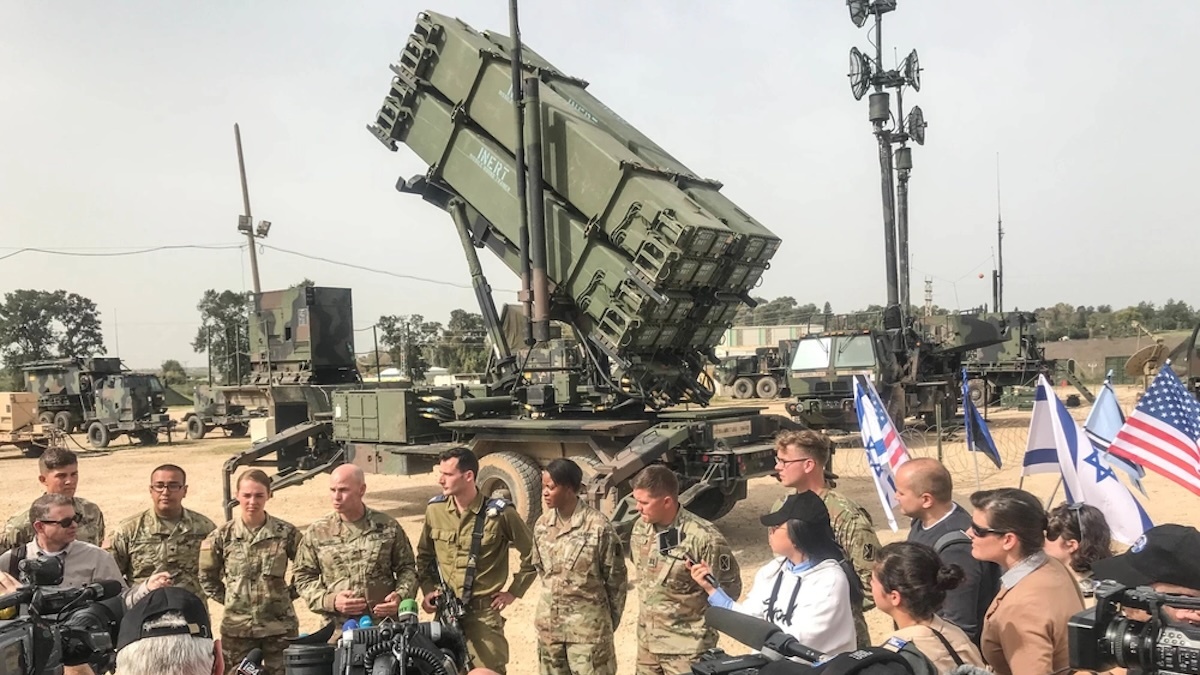
In sum, two interlinked policy prescriptions shape the military dimension of the U.S.-Israeli “special relationship.” These stipulate that first, the United States finance Israel’s military procurements, and second, the United States maintain the Middle East’s military balance so that Israel will defeat any adversary comprehensively.
It is this second stipulation — the qualitative military edge commitment — that shapes the first. This is because it ensures that Washington gives Jerusalem an unprecedented amount of financing and the green light for Israel to use this assistance to acquire top-tier technology. Equally, America’s commitment to Israel’s qualitative military edge ensures this privilege extends to Israel and Israel alone. As such, it affects Washington’s relations with not just Israel, but the entire Middle East.
…
Netanyahu is probably bluffing, given that U.S.-Israeli defense cooperation is so embedded that ending all military assistance by 2028 is unrealistic, to say the least. He likely knows that the current paradigm is under unprecedented strain: Americans across the political spectrum are increasingly disinclined to continue current levels of military assistance to Israel.
This has led pundits to ask whether Biden will be “the last pro-Israel Democratic president,” whose ideological affinity for Israel coalesced with internal U.S. structural constraints that raise the costs of public criticism of Jerusalem’s policies. This disincentivised any attempt to check Israel’s policies, even when they diverged sharply from Washington’s preferences. This is not something unique to Biden — previous American presidents from across the political spectrum, particularly Clinton and George W. Bush, have faced the same ideological and institutional constraints.
Yet continuing to guarantee Israel’s qualitative military edge while tapering off military assistance is unlikely to appease U.S. voters. Also, it will likely not assuage the concerns of Washington’s regional allies who feel increasingly threatened by Jerusalem’s revisionism. Even if it significantly decreases its military assistance, the United States will still be implicated for enabling Israel’s actions. It will at the same time possess less agency for constraining Israel’s force-centric pursuit of regional hegemony.