

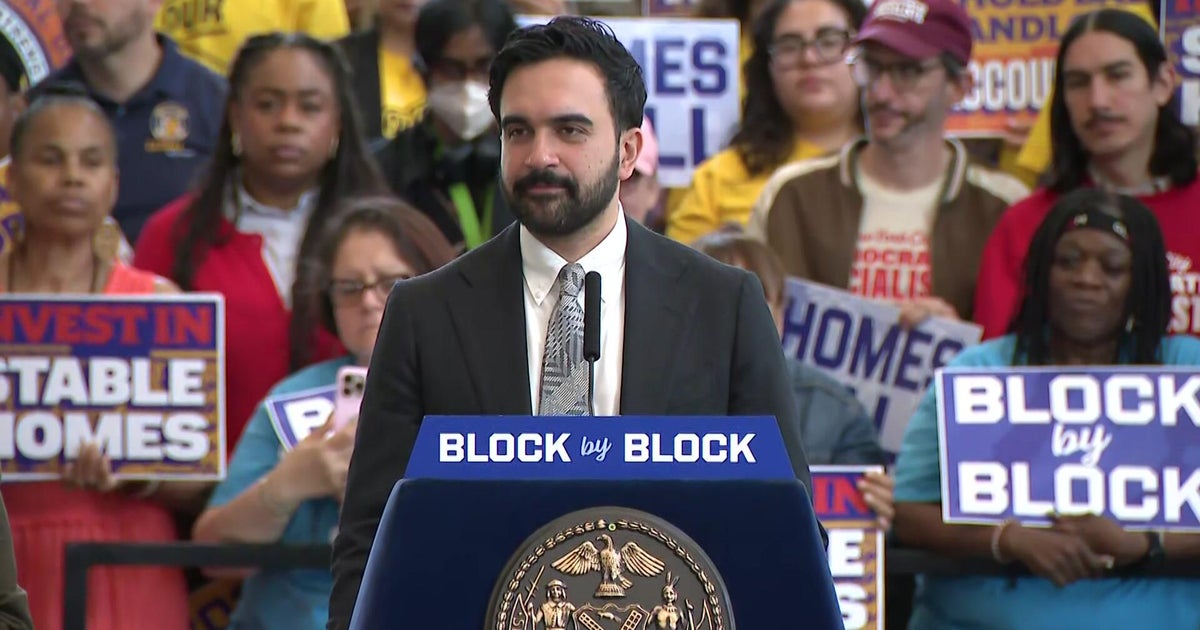
New York City Mayor Zohran Mamdani announced a new “block by block” initiative to tackle the city’s affordable housing crisis Tuesday morning.
The plan focuses on 400,000 affordable housing units, enhancing tenant protections and investing in public housing. Some 200,000 of those units will be new, rent-stabilized homes built over the next decade, as well as preserving and stabilizing an additional 200,000 homes.
Building affordable housing isn’t really difficult. What is difficult is building affordable housing that is AT LEAST as profitable as expensive housing.
The issue is that in order to do this with a free market housing system the government has to put it’s finger on the scale. Investors aren’t going to fund affordable housing projects if there is another investment that yeilds better returns at a similar risk. So, the government has to essentially guarantee the profitability of the investment into affordable housing.
You can reduce a lot of the final cost of the units by the government literally just building housing like the government builds roads. Shelter (like roads or public transit) serve a public good.
The issue with this is that this makes the cost of housing fall for the the entire market. Well, it’s only an issue to the investors and landlords really. It’s why they work to ensure all neoliberal governments keep doing “public private partnerships” in every aspect of government.
See “Red Vienna” and it’s housing system if you want more details. We have decades long examples of how even socdem policies can be successful. The issue isn’t with building. It’s with the government actually working towards objectives of its population and not the objective of profit.
Edit: LMAO. The top result for red Vienna is literally Mamdani talking about it 5 years ago.
https://youtu.be/LVuCZMLeWko
Yes, in a fantasy world where you don’t have to worry about interest groups, market or economy building affordable housing is easy.
In reality you will have to fight investors and landlords. You will have to compete for limited building materials (200k housing units is a lot, you will have to buy the materials somewhere). You will have to compete for the land with other projects. You will have to plan and expand infrastructure around those projects. And after you figure out the zoning, permits, designs and materials someone will have to build those units. Governments don’t really employ people to build housing the way they may employ people to maintain public infrastructure. So you either have to create huge public construction company or do public private partnerships. There are countries where public housing works but it doesn’t happen overnight. I really hope Mamdani can do this but I’ve seen projects like this fail many times before. Because they are hard.
It’s not a fantasy world mate. It literally exists in Vienna. It literally accounts for all the things you mentioned. You have to actually fight for it though. And if Mamdani fails because of capitalist interest; you keep fighting for it. Because it’s literally proven to be possible.
The “good things aren’t possible” perspective is really getting annoying. You’re like a spouse that was abused for years that’s telling me why you can’t leave your abuser.
They literally do. They just don’t in America.
Construction cost is not the issue we are discussing mate. We are discussing investment incentives to build affordable housing. That is the part you are failing to understand. The construction company is not the one incentivized to build luxury housing. They are building based on the choice of investors to build specific housing. Cost of labor is not the issue here mate.
You’re not even addressing the key part that is changing. The key part that is changing is that the government is choosing directly to put it’s money into building affordable housing. The government can take a “loss” on this (the same way it does with roads) because the government isn’t concerned with turning a profit on a single investment. It can operate for a public good that returns benefits and prosperity to the community.
Roads don’t have to be profitable to build. Houses don’t have to be profitable to build. Firefighters don’t have to make a profit stopping fires.
Having all those things is PROFITABLE to the society.
I was going to add that this system does work in places like Vienna but it requires complete change of of mindset around housing not only from officials but also from the public. Half of affordable housing in Vienna was built by co-ops mate. The entire model around planning and financing of housing projects and ownership has to change mate. This is not something you can do in a couple of years mate. As I said, I’m not against the idea. I hope he will make it. I’m just saying that I’ve seen big promises around affordable housing many times before and those always failed. Because changing the entire system is hard mate. And it takes time mate. Like all newly elected mayors Mamdani is very popular now but we’ll see if he can even win the next elections. Mate.
People like you spend the whole time boo-hooing the people actually doing the work to create change. Nothing you said here is anything useful. It’s not constructive criticism of any of the actual policy. You have spent the last two comments talking about stuff that is irrelevant, addressed in my initial comment, or addressed in Mamdani’s video.
Now you are essentially just saying “it’s hard”. Yes. It’s hard. It doesn’t get easier by you offering zero constructive criticism. You’re essentially just listing reasons for “why we shouldn’t even try”.
You may think you’re in favor of affordable housing. And maybe you are on principle. But you’ve spent this whole thread basically repeating excuses that politicians have fed you for decades for why good things are not possible. You need to change your mindset mate.
I never said we shouldn’t try. Where are you taking this from? I’m just saying that that the 400k housing units are not likely to happen. Because projects like this are hard. You would rather start pretending they are already built. That’s fine, start celebrating if you like. I’ll wait.
Yes. You’ll wait and in the mean time be an unhelpful doomer. Nothing you’ve said has been about the policy. You attempted to do that with your construction company point and then looked silly. So you just keep talking in a general tone. That’s what stupid people do when they want to appear smart. It’s ok to not understand something. But don’t double down when it becomes clear you don’t have any idea in which ways “it’s complicated”
When you spend your replies and time listing reasons for why something is “so complicated” and “it’s not that easy”. This is what you are doing. Whether you state it explicitly or not.
You are being a doomer towards the movement while still “supporting it in theory”. It’s a safe space where you can stay.
So if it fails you say: “see, I told you it’s complicated”
Or if its successful you say: “I supported this!”
It’s painfully obvious from your lack of substance in your replies and your lack of any specific policy position.
Well, I think you look silly getting mad about some commends on lemmy. Like my skepticism is going to derail Mamdani’s plans. Like I’m part of his administration and instead of helping him create policy I’m just complaining. Meanwhile I don’t even live in US and I don’t really care what happens in NYC. And I prefer to be realistic than blindly cheer everything Mamdani says. But you do you.
Cool. You have devolved into the “this conversation is meaningless because it’s on the Internet” defense. I’m annoying. I’m gonna combat this bull shit doomerism if I have 1000 people listening or 1. You’re the one that keeps replying.
You got here because instead of talking about any of the actual material policy objectives, or legitimate criticism, you just blabbered vague doomerism around a good policy being implemented.
When you get called out for it, and it’s made clear you don’t even know the first thing about what you’re critizing, of course you fall into the “I don’t care” shit reply. Stop replying if you don’t care.
If you care enough to reply then actually criticize the policy on its actual implementations.