

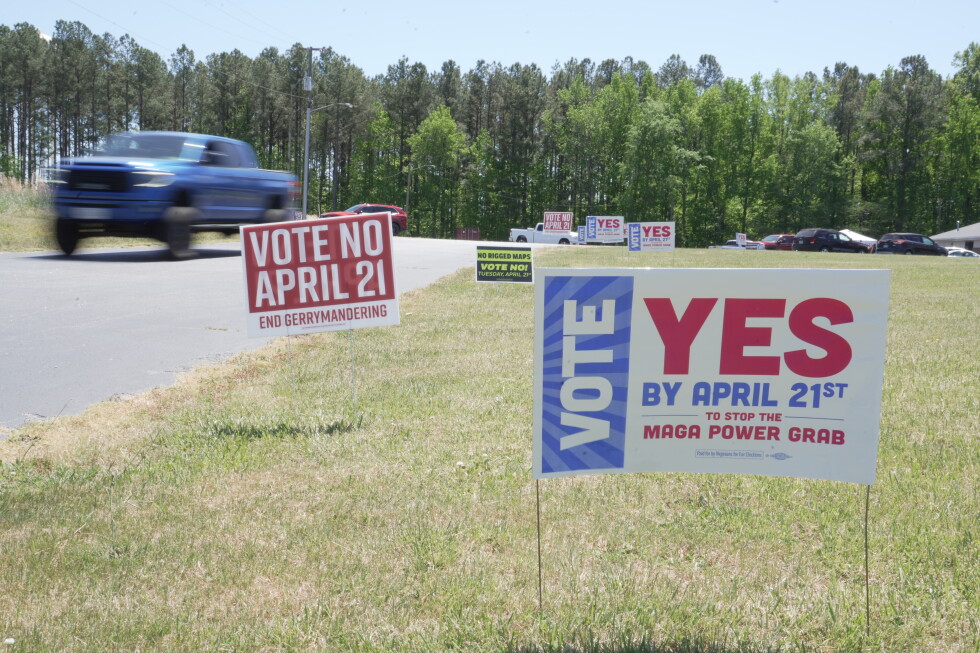
Democrats are poised to finish several seats behind Republicans in 2026 in the nationwide race to redraw maps for the U.S. House.
They can catch up in 2028, but only if they overcome a series of redistricting hurdles that the GOP does not face.
That’s because Democrats, in many states, can draw partisan political lines only if they evade constraints — some self-imposed — on their ability to counterpunch.
Remove districts, they’re mostly meaningless anyway and their purpose now seems to be focused on retaining power. The top x votes get the seats, forcing each party to field multiple candidates.