Sleepzy@feddit.it to Programmer Humor@lemmy.ml · 2 years agoElvisfeddit.itimagemessage-square34linkfedilinkarrow-up1166arrow-down111
arrow-up1155arrow-down1imageElvisfeddit.itSleepzy@feddit.it to Programmer Humor@lemmy.ml · 2 years agomessage-square34linkfedilink
minus-squarebl4kers@lemmy.mllinkfedilinkEnglisharrow-up16·2 years agoI don’t understand this. Small brained users rise up
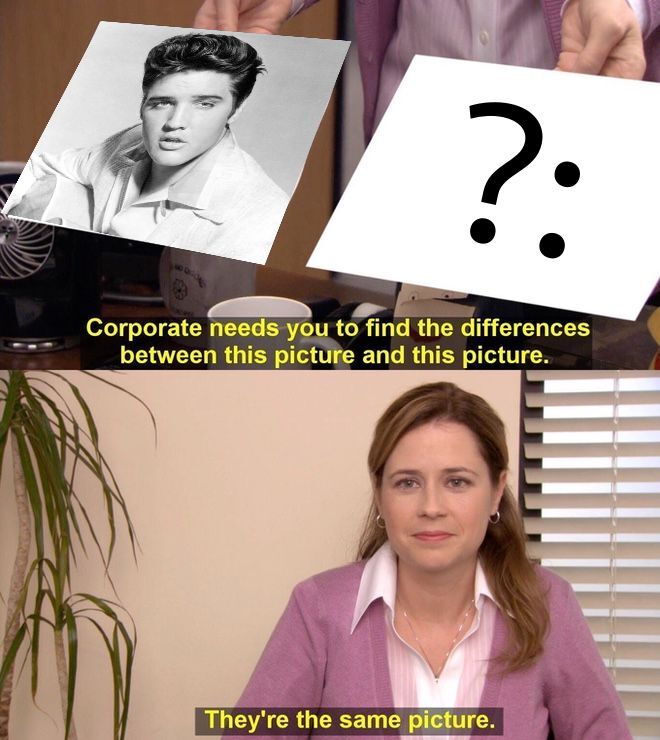
minus-squareQuazarOmega@lemy.lollinkfedilinkarrow-up14·2 years agoOn the left you have Elvis Presley, while on the right there’s the so-called Elvis operator
minus-squareThe Cuuuuube@beehaw.orglinkfedilinkEnglisharrow-up16·2 years agobeen programming since 2008. the fuck is an elvis operator?
minus-squareThe Cuuuuube@beehaw.orglinkfedilinkEnglisharrow-up3·2 years agogotacha. i’ve only ever heard them called ternaries. maybe i’m old. maybe i’m too young. definitely one of the two
minus-squareQuazarOmega@lemy.lollinkfedilinkarrow-up8·2 years agoIt specifically refers to this shorthand ?: that works like this: $value = $thing_that_could_be_truthy ?: 'fallback value'; # same as $value = $thing_that_could_be_truthy ? $thing_that_could_be_truthy : 'fallback value'; The condition is also the value if it is truthy
minus-squaredev_null@lemmy.mllinkfedilinkarrow-up3·edit-22 years agoIt’s a shorthand for writing this: variable = if (input != null) input else default This is equivalent: variable = input ?: default The answers confusing it with the ternary operator are wrong.
minus-squareAVincentInSpace@pawb.socialBanned from communitylinkfedilinkEnglisharrow-up3·2 years agowhy would you call it anything other than the ternary operator
minus-squaredev_null@lemmy.mllinkfedilinkarrow-up3·edit-22 years agoBecause it’s not one. Ternary operator is A ? B : C, Elvis operator is A ?: B. The same two characters are involved, but both the syntax and effect is different.
minus-squareAVincentInSpace@pawb.socialBanned from communitylinkfedilinkEnglisharrow-up2·2 years agoThe second one isn’t valid syntax in any programming language I’m familiar with. What does it do?
minus-squaredev_null@lemmy.mllinkfedilinkarrow-up4·2 years agoIt’s a shorthand for writing this: variable = if (input != null) input else default This is equivalent: variable = input ?: default
minus-squareAVincentInSpace@pawb.socialBanned from communitylinkfedilinkEnglisharrow-up2·edit-22 years agoHuh. Neat feature. That’s in C# I assume?
minus-squaredev_null@lemmy.mllinkfedilinkarrow-up2·edit-22 years agoIt’s in Kotlin and some other languages. C# has it but there it’s actually A ?? B.
minus-squareQuazarOmega@lemy.lollinkfedilinkarrow-up2·2 years agoRead further down on my other comment to understand, it’s just how the operator looks


I don’t understand this. Small brained users rise up
On the left you have Elvis Presley, while on the right there’s the so-called Elvis operator
been programming since 2008. the fuck is an elvis operator?
Removed by mod
Ternary if?then:else
gotacha. i’ve only ever heard them called ternaries. maybe i’m old. maybe i’m too young. definitely one of the two
It specifically refers to this shorthand
?:that works like this:$value = $thing_that_could_be_truthy ?: 'fallback value'; # same as $value = $thing_that_could_be_truthy ? $thing_that_could_be_truthy : 'fallback value';The condition is also the value if it is truthy
It’s a shorthand for writing this:
variable = if (input != null) input else defaultThis is equivalent:
variable = input ?: defaultThe answers confusing it with the ternary operator are wrong.
why would you call it anything other than the ternary operator
Because it’s not one. Ternary operator is A ? B : C, Elvis operator is A ?: B. The same two characters are involved, but both the syntax and effect is different.
The second one isn’t valid syntax in any programming language I’m familiar with. What does it do?
It’s a shorthand for writing this:
variable = if (input != null) input else defaultThis is equivalent:
variable = input ?: defaultHuh. Neat feature. That’s in C# I assume?
It’s in Kotlin and some other languages. C# has it but there it’s actually
A ?? B.Read further down on my other comment to understand, it’s just how the operator looks