

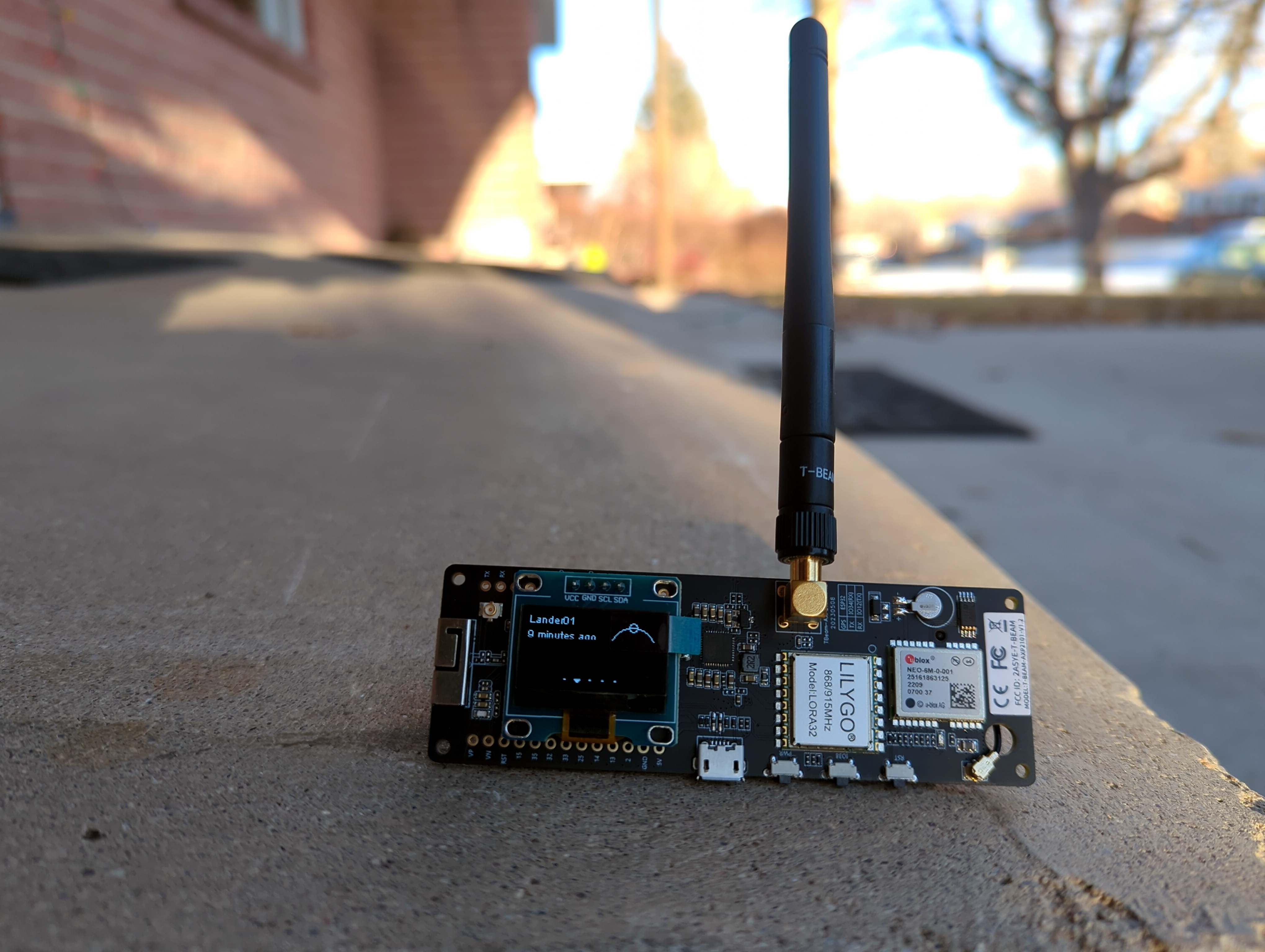
Although everyone has their own reasons for exploring a new hobby, one of the driving factors behind the popularity of Meshtastic and MeshCore has been the incredible accessibility offered by off-grid LoRa mesh networks. You don’t need any expensive hardware or a license to get on the air — armed with a $20 microcontroller dev board and open source software, you could be on the mesh in minutes. Then came the really exciting part, seeing who else was out there. The low barrier of entry and ad-hoc nature of these projects meant there was a good chance you’d soon find yourself exchanging messages with other like-minded folks in the area.
Or at least, that’s how it used to be. With the recent revelation that their default radio configurations have potentially been in violation of the Federal Communications Commission’s (FCC) regulations governing amateur usage of the 900 MHz industrial, scientific and medical (ISM) band, the users and developers of both Meshtastic and MeshCore have been sent scrambling. Getting in compliance isn’t necessarily a technical challenge. In fact, Meshtastic has already introduced changes aimed to address the issue and anyone running the latest alpha release can be sure that their initial radio configuration will meet FCC standards.
But unfortunately, this introduces a new problem. While it’s easy enough to get new installations of Meshtastic and MeshCore operating in a mode that keeps the FCC happy, doing so breaks compatibility with everything that’s already been deployed. The community will be fractured into distinct strata depending on when they first configured their hardware, with an added dash of confusion from the more rebellious users who will undoubtedly refuse to migrate over to the new settings.
Why is more bandwidth better? Is it spreading out the same energy = less interference potential? Usually the goal is to use the least bandwidth (and power) possible, right?
You’re correct in your understanding, but one problem is that Lora isn’t spread spectrum in the traditional sense(s). It’s a narrow band signal that traverses over a wide band as it’s method of modulation/encoding. The FCC has regulations for direct sequence spread spectrum (entire transmission is spread out) and frequency hopping spread spectrum (narrowband signal, randomly transmitted within a range). Lora is neither, using chirp spread spectrum (narrowband signal travels up and down within it’s bandwidth).
The ideas as I understand them in the regulations is that a full spread transmission has lower amplitude and isn’t strong enough at any frequency to interfere with other transmitters, and the pseudo random spread doesn’t stay anywhere long enough to completely interfere on any one frequency. Lora isn’t either, but it is low power and traverses it’s bandwidth quickly, so it most closely follows the direct sequence spread spectrum method if you remove your glasses and squint.
This sharp transmission, but travelling over a wide range is what makes it able to transmit over such long distances. It has the signal to noise of Morse code, and interference tolerance of direct sequence spread spectrum.
So this is trying to hamstring it, right? Pushing it higher reduces range?
That’s correct. As the bandwidth increases, the radiated power from the transmitter is reduced.