if the brain interprets something as something else, it means the brain is wrong. So… again there’s no blemish. It’s clearly the other brain which has issues — the “observer” — not the tattoo bearer.
So do guys like tattoos on girls? Most guys do find tattoos on women attractive, as long as they are feminine, delicate, and in flattering locations on the body like the shoulder, wrist, or ankle. Small, minimalist tattoos or ones with personal meaning tend to be the most appealing to men.
On top of that, the most important confirmation of my research is that men do indeed prefer women without body hair, no matter if it’s located in the leg and/or armpit. In the “choose the most attractive picture” questions, the photo of a woman without body hair was rated significantly more attractive than the one with body hair, with 95.2% of the participants choosing the hairless women. When it came to explaining their answers, the participants stated the following opinions: preferring partners with smooth skin (95.2% of the participants), seeing body hair as an emasculating feature (85.7%), and considering that females “just look better” without body hair (28.5%). These results demonstrate that body hair is associated with femininity, and having a hairless body is an expectation of men towards women.
I conclude that men prefer plain skin on women. Note that with tattoos on women, men prefer small tattoos in hidden locations.
“Most guys” doesn’t mean anything. An average is a pretty bad argument when it comes to making blanket statements about people’s preferences. It ignores culture, health, age, … so many things. But I guess the point is, “it seems like 6 out of 10 people respond yes to this prompt.” It’s shallow, meaningless… It barely makes a scientific statement, let alone defend your assertions. Most guys are personable enough to also not meet such broad statements, if you supply just an ounce of real-life context.
Your results also don’t demonstrate anything beyond cultural bias in a potentially biased study.
The statements weren’t broad. They were very specific. Most guys find tattoos on women attractive if they’re small and in hidden locations. The results might not be cultural but biological, similar to the study on body hair on women.
A study or article saying some men in some contexts find some tattoos attractive is not evidence for a universal male preference, and it definitely is not evidence for a biological law. “Most guys” is still a blanket claim built from a narrow sample, a specific culture, and a specific framing of attractiveness.
Same problem with the body-hair point: a preference in one study does not become “men prefer plain skin on women” as though that were some objective truth. It only shows that a sample of participants responded a certain way in a certain setting. That is not the same thing as proving what men generally want across cultures, ages, and individual tastes.
Also, “small tattoos in hidden locations” is not the same as “men prefer unblemished skin.” That is a different claim entirely. You are quietly inflating “some respondents liked discreet tattoos” into “men prefer women with no marks,” which is a leap, not a conclusion.
The honest conclusion is much narrower: preferences vary, and your sources do not justify a universal statement about what men like.
Your position is off putting, though. I can’t just sit here and try to educate you, because your romanticism of what’s effectively premature biological attributes is gross.
The Brandeis study on body hair was scientific. The survey on tattoos was not but there does seem to be a relationship. Most men find tattoos on women attractive, but they have to be small and hidden. I conclude men prefer women with plain skin. The study on body hair on women is probably correct otherwise women would not spend time and money removing body hair.
First, the body-hair study does not prove a biological preference. At most it shows that a sample of men from a particular culture preferred a particular presentation of women.
Second, your tattoo source doesn’t even support your conclusion. You started with “most men find tattoos attractive if they’re small and hidden” and somehow arrived at “men prefer plain skin.” Those are not equivalent statements.
If a man finds a small tattoo attractive, then by definition he is not preferring plain skin in that case.
Third, “women spend money removing body hair, therefore men biologically prefer it” is a terrible argument. By that logic, because women spend billions on makeup, hair dye, cosmetic surgery, high heels, push-up bras, anti-aging products, and fashion, all of those preferences must also be biological. That’s obviously not how social norms work.
Finally, you’re treating “feminine” as though it’s an objective biological category when much of what people call feminine changes dramatically across time and culture. Different societies have preferred different body shapes, skin tones, hairstyles, body hair practices, tattoos, piercings, and cosmetic standards.
What your sources support is a much narrower claim: some men in some populations expressed certain preferences under certain conditions.
What they absolutely do not support is your repeated claim that women are most feminine when they have completely unmarked skin or that this is some universal male preference.


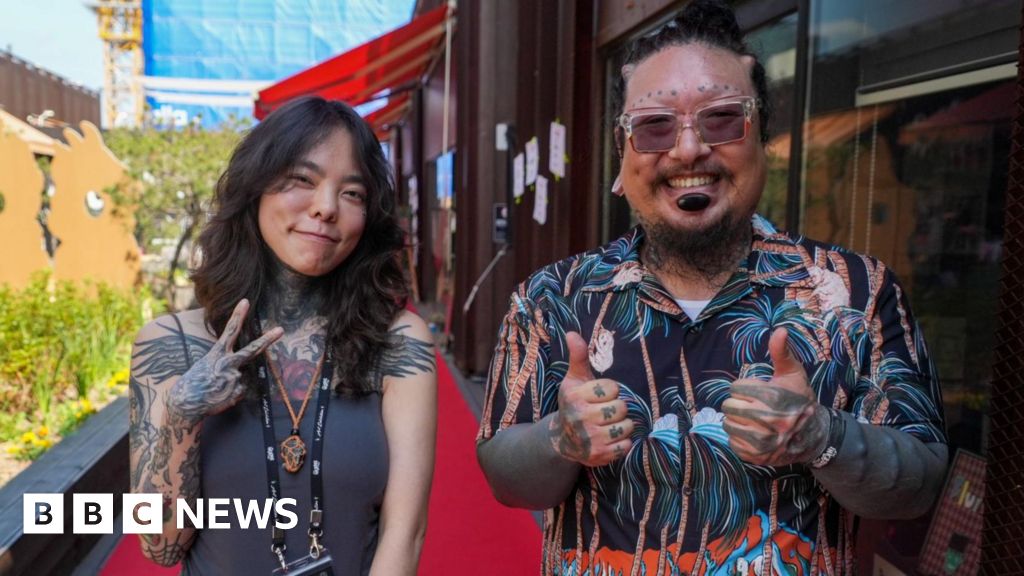
if the brain interprets something as something else, it means the brain is wrong. So… again there’s no blemish. It’s clearly the other brain which has issues — the “observer” — not the tattoo bearer.
From https://www.glamivibe.com/do-guys-like-tattoos-on-girls/
So do guys like tattoos on girls? Most guys do find tattoos on women attractive, as long as they are feminine, delicate, and in flattering locations on the body like the shoulder, wrist, or ankle. Small, minimalist tattoos or ones with personal meaning tend to be the most appealing to men.
From https://www.brandeis.edu/writing-program/write-now/2021-2022/azevedo-ligia/index.html
On top of that, the most important confirmation of my research is that men do indeed prefer women without body hair, no matter if it’s located in the leg and/or armpit. In the “choose the most attractive picture” questions, the photo of a woman without body hair was rated significantly more attractive than the one with body hair, with 95.2% of the participants choosing the hairless women. When it came to explaining their answers, the participants stated the following opinions: preferring partners with smooth skin (95.2% of the participants), seeing body hair as an emasculating feature (85.7%), and considering that females “just look better” without body hair (28.5%). These results demonstrate that body hair is associated with femininity, and having a hairless body is an expectation of men towards women.
I conclude that men prefer plain skin on women. Note that with tattoos on women, men prefer small tattoos in hidden locations.
“Most guys” doesn’t mean anything. An average is a pretty bad argument when it comes to making blanket statements about people’s preferences. It ignores culture, health, age, … so many things. But I guess the point is, “it seems like 6 out of 10 people respond yes to this prompt.” It’s shallow, meaningless… It barely makes a scientific statement, let alone defend your assertions. Most guys are personable enough to also not meet such broad statements, if you supply just an ounce of real-life context.
Your results also don’t demonstrate anything beyond cultural bias in a potentially biased study.
The statements weren’t broad. They were very specific. Most guys find tattoos on women attractive if they’re small and in hidden locations. The results might not be cultural but biological, similar to the study on body hair on women.
You are overstating your sources.
A study or article saying some men in some contexts find some tattoos attractive is not evidence for a universal male preference, and it definitely is not evidence for a biological law. “Most guys” is still a blanket claim built from a narrow sample, a specific culture, and a specific framing of attractiveness.
Same problem with the body-hair point: a preference in one study does not become “men prefer plain skin on women” as though that were some objective truth. It only shows that a sample of participants responded a certain way in a certain setting. That is not the same thing as proving what men generally want across cultures, ages, and individual tastes.
Also, “small tattoos in hidden locations” is not the same as “men prefer unblemished skin.” That is a different claim entirely. You are quietly inflating “some respondents liked discreet tattoos” into “men prefer women with no marks,” which is a leap, not a conclusion.
The honest conclusion is much narrower: preferences vary, and your sources do not justify a universal statement about what men like.
Your position is off putting, though. I can’t just sit here and try to educate you, because your romanticism of what’s effectively premature biological attributes is gross.
The Brandeis study on body hair was scientific. The survey on tattoos was not but there does seem to be a relationship. Most men find tattoos on women attractive, but they have to be small and hidden. I conclude men prefer women with plain skin. The study on body hair on women is probably correct otherwise women would not spend time and money removing body hair.
You’re making several unsupported jumps.
First, the body-hair study does not prove a biological preference. At most it shows that a sample of men from a particular culture preferred a particular presentation of women.
Second, your tattoo source doesn’t even support your conclusion. You started with “most men find tattoos attractive if they’re small and hidden” and somehow arrived at “men prefer plain skin.” Those are not equivalent statements.
If a man finds a small tattoo attractive, then by definition he is not preferring plain skin in that case.
Third, “women spend money removing body hair, therefore men biologically prefer it” is a terrible argument. By that logic, because women spend billions on makeup, hair dye, cosmetic surgery, high heels, push-up bras, anti-aging products, and fashion, all of those preferences must also be biological. That’s obviously not how social norms work.
Finally, you’re treating “feminine” as though it’s an objective biological category when much of what people call feminine changes dramatically across time and culture. Different societies have preferred different body shapes, skin tones, hairstyles, body hair practices, tattoos, piercings, and cosmetic standards.
What your sources support is a much narrower claim: some men in some populations expressed certain preferences under certain conditions.
What they absolutely do not support is your repeated claim that women are most feminine when they have completely unmarked skin or that this is some universal male preference.