
3·
6 days agoI think it’s in part because the song is slightly too mature for her that it appeals to Kiki, and maybe to the younger audience who relates to her.

I think it’s in part because the song is slightly too mature for her that it appeals to Kiki, and maybe to the younger audience who relates to her.
The lyrics of Rouge no Dengon are really good. It’s about a woman who’s on a train, leaving town to get away from her cheating husband. She left a “message in rouge” for him to find in the bathroom, that she won’t be back until he changes his ways. She’s actually going to his mother’s house, and she’ll have his mother call him to scold him in the morning.
If you’re familiar with the song as the opening theme to Kiki’s Delivery Service, it really really fits Kiki’s character as she listens to the song while leaving home for the first time. You might get the feeling that the themes of the song are things relates to herself: independence, anxiety, maturity, and female solidarity. And of course, if you watch the movie, those are all things she experiences in her new town.
Basically it’s a REALLY REALLY good song and absolutely perfect choice for the movie it’s in. I also love the singer’s other Ghibli movie song you mention, Contrails/Hikoukigumo.

I remember seeing this clip several months ago. In context, it was clearly in reference to Biden’s cancer diagnosis, which was still popular/relevant news at the time.
“When you start feeling sorry for him, remember he’s a bad guy” -Trump
*points at photo
“Is that the new pope?”
“Yeah!”
“Is he doin a good job?”
*4 second pause, looks back at photo
“Uhh, yes. He’s doing a good job. Did you know he’s from America!?”
I thought the serious 4-second evaluation period was funny. Good to know he’s doing a good job. This was at a Catholic thrift store yesterday.
Your arms and hands would be pretty messed up. Depending on which arm was broken twice and how badly, it may be permanently damaged.
Biggest thing is probably blood loss. I think your survival comes down to how much blood you lost in your glass injuries and from every other injury combined.
Source: not a doctor, just guessing.

Plus does those sea sounds last for that long, I really do not know.
If you live near the ocean, the seashell ocean sound will last forever. If you’re a little farther away then you need to take them back to the ocean to recharge every couple months.
I’ve talked about this before but a logographic lingua franca has a lot of potential to create text that is legible in any language. 1000 years ago, the Chinese writing system was used all across East Asia and you didn’t even have to know the spoken Chinese language to read it, even though the sentence order could be totally different.
There are definitely a lot of problems with this idea but I think the positives outweigh the negatives. (And of course, everybody should also keep their own language’s writing system. You could write in a logographic lingua franca if you were expecting to communicate with people who don’t speak your language.)
This is ignoring the geopolitical reasons that English became the worldwide lingua franca and is reverse-engineering the reason from a single example.
Chinese was the lingua franca of the sinosphere for centuries.
Imagine if it was China who had the power and expanse of the British Empire, it’s not like a non-tonal non-logographic language would suddenly appear and become a lingua franca for no reason other than it being easier to learn. That’s just not how lingua francas come to be.
Though you could argue that if Chinese became the worldwide lingua franca, the efforts to romanize/alphabetize it would have more force and the language itself might change. Vietnam, Korea, and Japan all had their own movements to move away from Chinese characters (with VERY different motivations/outcomes in each country).
But I really disagree with your premise that difficulty in learning is what decides a lingua franca.
I get this too. I didn’t think/know it was air pressure though? Seems to happen to me randomly, and rarely.
The fact that five of the “hads” are not semantically the word “had” but rather a quotation makes this one weaker than “Buffalo buffalo Buffalo buffalo buffalo buffalo Buffalo buffalo” imo, though you could argue that Buffalo as a proper noun is also kinda cheating.
Dogs are made out of air, water, and dog food.
In the original picture I could only ever see white & gold, but in this photo you post I can see either way.
Alone Again, Naturally by Gilbert O’Sullivan.
A small twist, but a very devastating song
China has an extremely high literacy rate, so the difficulty in learning the system is, at least, provably surmountable.
The strength of being able to unite communication historically across East Asia and potentially around the world is a pretty big plus. Offering such a strength impossible in other systems, ideograms are hardly equivalent to imperial units.
Chinese, Korean, Vietnamese, and Japanese are totally unrelated languages. Chinese languages are sino-tibetan, Vietnamese is austro-asiatic, Japanese is japonic, and Korean is alone in its own family. Totally unrelated to each other as far as we can trace.
Despite that, they all used to use the same writing system and, shockingly, they were mutually intelligible when written down. In Japanese this method of reading Chinese (without actually knowing Chinese) was called kundoku but I think that the other languages also had ways to read & write Chinese writing with very light translation. Even today, Chinese writing unites the different dialects/languages of China.
My proposed lingua franca is the Chinese writing system. Everybody should keep their own writing systems, but they should also learn to transcribe into Chinese, the only extant written language in which this is really possible.
I stopped believing in toki pona when I heard somebody say that “watermelon” would be “kili telo” (fruit [of] water). It goes without saying that “kili telo” would not be understood as “watermelon” unless they had heard it in English before, or heard someone use the English-derived “kili telo”.
If you’re going to use English-language ideas to form words, then English is a prerequisite language for speaking toki pona, and toki pona becomes useless.
I think if toki pona is developed as you describe, it could be much more useful than it is today.


YouTube killed mine recently ;-; what do you use?
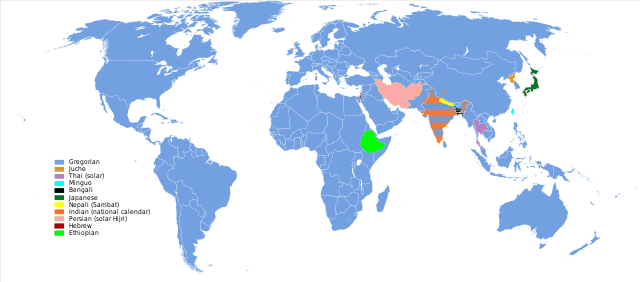
The Gregorian calendar is by far the most commonly used calendar in the world, certainly in the English speaking world, and while I don’t particularly care to defend or attack your comment or the original comment, my point stands that the most obvious interpretation of what they said is in the context of the Gregorian calendar and to pretend they meant it outside of that context is silly.
I used to think about this a lot too. I think it’s just because it’s a given that people would wear pants. They only need to clarify shirt & shoes because that’s what they expect people are coming in without; they don’t need to define their whole dress code because pants are implied.